

The Complete Guide to Selecting the Right Energy Meter Mould for Your Manufacturing Line
In the rapidly evolving energy metering industry, choosing the right energy meter mould is one of the most critical decisions a meter manufacturer can make. Whether you are producing single phase meters for residential deployments or three phase meters for industrial applications, the quality of your mould directly impacts product durability, dimensional accuracy, and ultimately your competitive position in the global market.
With the global smart meter market projected to exceed 30 billion USD by 2030, manufacturers face mounting pressure to scale production while maintaining the highest quality standards. This comprehensive guide walks you through every essential factor to consider when selecting an energy meter mould, from material compatibility and cavity design to supplier evaluation and total cost of ownership. By the end of this article, you will have a clear framework for making informed procurement decisions that drive long-term manufacturing excellence.
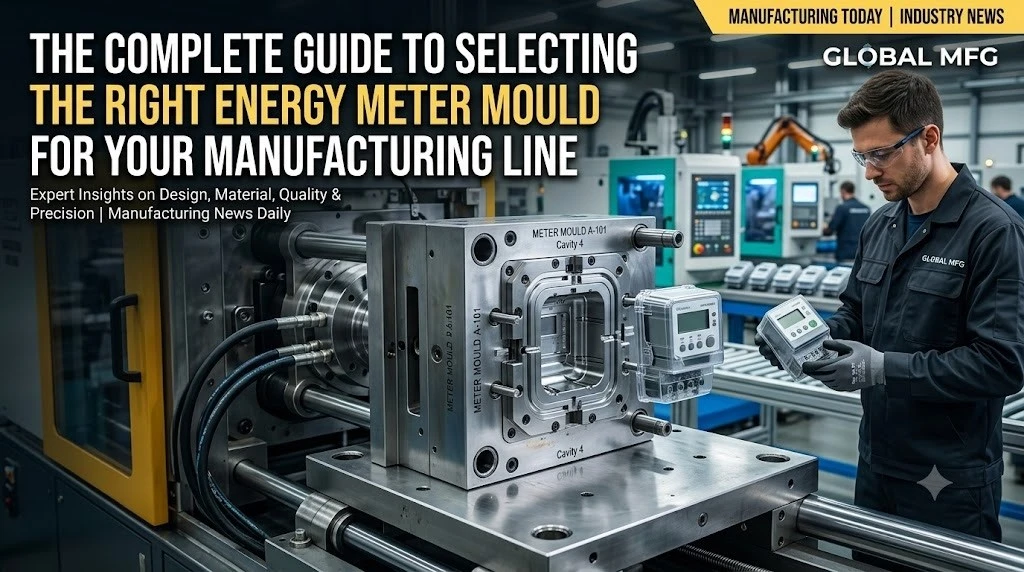
Why Energy Meter Mould Selection Matters More Than Ever
The energy metering industry has undergone a fundamental transformation over the past decade. The shift from traditional electromechanical meters to smart meters has introduced new requirements for enclosure design, material properties, and manufacturing precision. A modern smart meter enclosure mould must accommodate complex internal geometries, multiple component mounting points, and stringent environmental protection ratings.
Consider the cost implications: a single mould investment typically ranges from $15,000 to $80,000 depending on complexity, cavity count, and material specifications. A poor selection decision does not just mean a financial loss. It can lead to months of production delays, quality issues, and damaged customer relationships. This is why leading meter manufacturers invest significant time in the mould selection process before committing to production.
Key Industry Trends Driving Mould Requirements
Several macro trends are reshaping the energy meter mould landscape. First, the global rollout of Advanced Metering Infrastructure (AMI) has created unprecedented demand for standardized meter enclosures that can house sophisticated electronics. Second, regulatory requirements across different markets, from IEC standards in Europe to ANSI standards in North America, impose specific dimensional and material constraints on meter housings.
Third, the miniaturization trend in electronics design means that modern meter enclosures must pack more functionality into smaller form factors, requiring higher precision moulds with tighter tolerances. Fourth, sustainability regulations are driving demand for recyclable engineering plastics, which in turn affects mould design parameters such as gate positioning and wall thickness uniformity.
These trends collectively mean that selecting a single phase meter base mold or a three phase meter housing mould today requires a deeper understanding of both current requirements and future evolution paths than ever before. Manufacturers who invest in understanding these trends and partner with knowledgeable energy meter mould suppliers gain a significant competitive advantage in their markets.
Understanding the Different Types of Energy Meter Moulds
Energy meter moulds can be categorized by several dimensions, including the meter type they produce, the material they process, and the manufacturing method they employ. Understanding these categories is essential for making the right selection for your specific production needs.
By Meter Type
Single Phase Meter Moulds: Designed for residential and light commercial applications, single phase meter base mold designs typically feature smaller cavity footprints with emphasis on high-volume production efficiency. These moulds usually produce enclosures for meters rated between 5A and 100A, and represent the highest volume category in the global market.
Three Phase Meter Moulds: Built for industrial and commercial applications, these moulds produce larger enclosures that must accommodate additional current transformers, larger terminal blocks, and more complex display assemblies. The energy meter housing mold for three phase meters often requires multi-plate mould designs with complex core-pull mechanisms.
Smart Meter Enclosure Moulds: Specifically engineered for next-generation smart meters with integrated communication modules, these moulds must account for antenna windows, additional ventilation requirements, and secure mounting features for electronic sub-assemblies. The smart meter enclosure mould represents the most technically advanced category in the market.
By Manufacturing Process
Injection Moulding: The dominant process for energy meter enclosures, injection moulding offers the best combination of precision, repeatability, and cost-effectiveness for high-volume production. Most energy meter housing mould designs today are optimized for injection moulding with engineering thermoplastics such as polycarbonate (PC), ABS, or PC/ABS blends.
Compression Moulding: Used primarily for thermoset materials like BMC (Bulk Moulding Compound), compression moulding remains relevant for applications requiring exceptional thermal resistance or flame retardancy. Some utility companies specify BMC enclosures for harsh environment deployments where extreme temperatures are the norm.
Understanding which process best suits your product requirements is the first step in the mould selection journey. An experienced meter mould manufacturer will help you evaluate these options based on your specific application, volume requirements, and target market specifications.
Critical Factors in Energy Meter Mould Selection
1. Material Compatibility and Processing Windows
The mould must be engineered to work optimally with your chosen enclosure material. Different engineering plastics have vastly different shrinkage rates, flow characteristics, and processing temperatures. For instance, polycarbonate requires mould temperatures between 80-120 degrees Celsius, while ABS operates optimally at 40-80 degrees Celsius. Your smart meter enclosure mould supplier must understand these nuances and design the cooling system accordingly.
Additionally, consider the material end-use requirements. UV resistance, flame retardancy ratings (UL94 V-0 is standard for most markets), tracking resistance (CTI values), and impact strength all influence both the material choice and the mould design. A qualified meter mould manufacturer will help you navigate these trade-offs and optimize the mould for your specific material selection.
2. Cavity Design and Production Capacity
The number of cavities in your energy meter mould directly determines your production throughput. Single cavity moulds offer the lowest initial investment but the highest per-unit cost. Multi-cavity moulds (2, 4, or even 8 cavities) increase throughput but require larger injection molding machines and higher initial investment.
The optimal cavity count depends on your annual volume requirements, product mix strategy, and capital allocation philosophy. For manufacturers serving multiple markets with different meter form factors, a family mould approach or multiple single-cavity moulds may offer better flexibility than a high-cavity single-design mould. Discuss your production plans openly with your meter mould supplier to find the right balance.
3. Precision and Tolerance Requirements
Energy meter enclosures demand tight dimensional tolerances, typically plus or minus 0.1mm for critical mating surfaces and plus or minus 0.05mm for sealing faces. The precision of your single phase meter base mold directly affects IP rating compliance, component fit, and final assembly quality.
Achieving these tolerances requires not just precision CNC machining of the mould, but also careful consideration of mould base selection, guide pin systems, ejection design, and thermal management. Leading meter mould manufacturers invest in high-precision machining centers with tolerances of plus or minus 0.005mm to ensure consistent mould quality across the entire production run.
4. Mould Life and Maintenance Considerations
A quality energy meter housing mold should deliver a minimum of 500,000 shots over its lifetime, with premium moulds targeting 1 million shots or more. Mould life is influenced by steel grade selection (P20, H13, S136, or hardened tool steels), surface treatments (nitriding, chrome plating, PVD coatings), and maintenance practices.
When evaluating a meter mould supplier, request detailed information about their steel sourcing, heat treatment processes, and quality control procedures. Reputable suppliers provide material certificates and hardness test reports for all critical mould components. This documentation is not just bureaucratic overhead. It is essential evidence of quality that supports your own certification and quality management processes.
Evaluating Energy Meter Mould Suppliers: A Framework
Selecting the right mould is inseparable from selecting the right supplier. The energy meter mould manufacturing landscape includes everything from large multinational tooling companies to small regional workshops. Here is a structured framework for supplier evaluation that can help you make the right choice.
Technical Capability Assessment
Evaluate potential meter mould manufacturers across several dimensions: their experience specifically with energy meter moulds (not just general injection moulds), their design engineering team size and expertise, their machining equipment portfolio, and their quality management certifications. A supplier with dedicated energy meter mould experience will understand the specific challenges of this application, from meeting IEC 62052-11 requirements to designing for automated assembly.
Production Capacity and Lead Time
Standard energy meter mould lead times range from 45 to 90 days depending on complexity. Ensure your supplier can meet your timeline without compromising quality. Ask about their current capacity utilization and whether they have the machining resources to handle your project alongside their existing commitments. A supplier operating at full capacity may struggle to deliver your mould on time, while one with available capacity and a strong track record is likely a better partner.
After-Sales Support and Technical Service
Mould maintenance, repairs, and modifications are inevitable over the product lifecycle. Choose a meter mould supplier that offers comprehensive after-sales support, including process optimization assistance, spare parts availability, and modification services. Suppliers located in major manufacturing hubs like Hangzhou, China benefit from established logistics networks that facilitate rapid spare parts delivery globally. This support infrastructure can mean the difference between a minor adjustment and a prolonged production stoppage.
Reference Checks and Track Record
Request references from current customers, particularly those in similar market segments to yours. A meter mould manufacturer who has successfully served other smart meter producers brings invaluable application knowledge to your project. Ask about delivery performance, mould quality, modification responsiveness, and overall partnership experience.
Cost Analysis: Total Cost of Ownership for Energy Meter Moulds
While initial mould cost is important, smart procurement decisions consider the total cost of ownership (TCO) over the mould entire service life. Focusing solely on the purchase price can lead to selecting a mould that costs significantly more over its lifetime due to higher maintenance requirements, shorter lifespan, or production inefficiencies. Key TCO components include the following categories:
|
Cost Component |
Typical Range (USD) |
% of TCO |
Key Considerations |
|
Initial Mould Cost |
$15,000 - $80,000 |
25-35% |
Cavity count, steel grade, complexity |
|
Installation & Commissioning |
$1,000 - $5,000 |
3-5% |
Machine setup, process validation |
|
Maintenance & Repairs |
$2,000 - $10,000/year |
15-20% |
Preventive maintenance, wear parts |
|
Process Optimization |
$1,000 - $3,000 |
2-3% |
Cycle time reduction, quality improvement |
|
Modification & Updates |
$3,000 - $15,000 |
10-15% |
Design changes, new features |
|
Downtime Costs |
Variable |
10-20% |
Production loss during mould issues |
Why Jian Xin Technical Is Your Ideal Energy Meter Mould Partner
With over two decades of experience in the energy metering industry, Jian Xin Technical Limited has established itself as a leading energy meter mould manufacturer based in Hangzhou, China. Our 100,000 square meter manufacturing facility houses over 100 advanced machines, enabling us to deliver precision moulds that meet the most demanding specifications for meter producers worldwide.
Our competitive advantages for meter mould procurement include:
• Comprehensive product range: From single phase meter base mold to smart meter enclosure mould designs, we cover the full spectrum of energy meter tooling needs
• In-house design and engineering: Our team of experienced mould designers uses advanced CAD/CAM software to optimize every aspect of mould performance
• Quality assurance: Every mould undergoes rigorous dimensional inspection, trial runs, and process validation before shipment to customers
• Global supply chain: Having exported to over 30 countries, we understand the logistics and documentation requirements for international mould delivery
• Customization capability: Whether you need a standard energy meter housing mold or a fully custom smart meter enclosure mould with unique features, our engineering team can deliver solutions tailored to your exact requirements
Conclusion: Making the Right Choice for Your Manufacturing Future
Selecting the right energy meter mould is a strategic decision that impacts your manufacturing competitiveness for years to come. By carefully evaluating your technical requirements, understanding the key selection factors, and partnering with an experienced meter mould manufacturer, you can position your production line for success in the rapidly growing smart metering market.
Whether you need a standard single phase meter base mold for a high-volume residential deployment program, a precision smart meter enclosure mould for your next-generation product line, or a custom energy meter housing mold with specialized features, the right partner makes all the difference in achieving your production goals.
Contact Jian Xin Technical today to discuss your energy meter mould requirements. Our engineering team is ready to help you optimize your mould selection for maximum production efficiency and product quality. With our proven track record of serving meter manufacturers across 30 plus countries, we are confident in our ability to exceed your expectations and become your long-term manufacturing partner.


