

How To Measure Three-phase Current With Two-phase CT
How To Measure Three-Phase Current With Two-Phase CT
Understanding the two-CT method, its limitations, and when to upgrade to a dedicated three-phase CT meter.
Using two CTs and three ammeters can only measure three-phase symmetrical loads. If the three-phase loads are asymmetrical, the load current of the phase that is not equipped with CTs is inaccurate.
Two-Phase CT Wiring Method
Assume that CT is installed in phase A and C (any two phases are acceptable). When wiring, pay close attention to CT polarity:
- The primary current of phase A and C flows in from the CT L1 side.
- The A and C phase CT secondary side K1 terminals connect to the A and C phase ammeters respectively.
- The other two terminals of the A and C ammeters are shorted together, then a wire is led to the B-phase ammeter.
- The other terminal of the B-phase ammeter returns to the CT secondary side K2 terminal (both K2 terminals are shorted together and grounded).
When You Need Accurate Readings on Every Phase: Three Phase CT Meters
The two-CT method is a useful workaround for quick field measurements, but as noted, it falls short on unbalanced three-phase loads - which are common in real industrial and commercial environments where motors, VFDs, and mixed equipment draw current unevenly across phases.
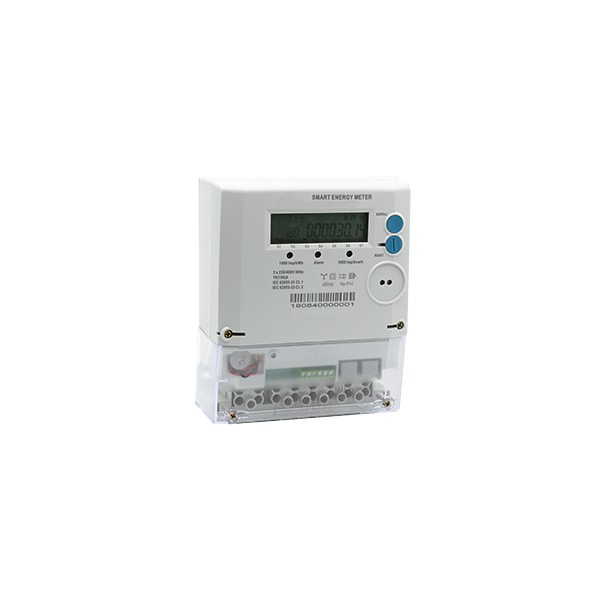
For panel builders, system integrators, and facility engineers who need reliable readings regardless of load balance, a dedicated three phase CT meter is the more accurate solution. With independent CT inputs on all three phases, it captures true current, voltage, and energy data on each line - no estimation, no blind spots - making it suitable for energy monitoring, sub-billing, and load analysis in factories, commercial buildings, and power distribution systems.
Key Limitation of the Two-CT Method
The two-CT method relies on estimating the third phase and only works reliably for symmetrical (balanced) loads. In real-world industrial and commercial environments, unbalanced loads are the norm - making a dedicated three-phase CT meter the correct choice for accurate, continuous monitoring.
Frequently Asked Questions
Q: Why choose a three phase CT meter instead of a manual two-CT setup?
A: A three phase CT meter measures each phase independently and continuously, so it remains accurate even under unbalanced loads - unlike the two-CT method, which relies on estimating the third phase and only works reliably for symmetrical loads.
Q: What current ratings and CT ratios are available for bulk or project orders?
A: Our three phase CT meters support a range of CT ratios and current ratings to match project specifications, from light commercial to heavy industrial loads. Contact our team with your load requirements for a configuration recommendation.
Q: Can the meter be customized for OEM panel integration or specific communication protocols?
A: Yes. We support OEM/ODM customization including display format, housing, and communication protocol (RS485/Modbus and others) for panel builders and system integrators.
Q: Are your three phase CT meters certified for accuracy and compliance?
A: Yes, our three phase CT meters are tested to IEC accuracy standards and calibrated in-house before shipment. Test reports and certificates are available on request for bulk and project orders.
Jian Xin Technical manufactures three phase CT meters at our Hangzhou facility, supplying panel builders, system integrators, and distributors for industrial, commercial, and utility applications worldwide. Every unit is accuracy-tested in-house, with OEM/ODM support available for project-specific requirements.
Specifying meters for a panel build or industrial energy monitoring project? Get accurate three-phase readings on every load balanced or not.
Request a Quote →No Information


