

What is a voltage shunt?
What is a voltage shunt?
In the realm of electrical engineering and power measurement, a voltage shunt plays a crucial role in accurately quantifying electrical current. As a shunt supplier, I am well - versed in the intricacies of these devices and their significance in various applications. In this blog, we will explore what a voltage shunt is, its working principle, applications, and the different types available in the market.
Understanding the Basics of Voltage Shunt
A voltage shunt is essentially a low - resistance device that is placed in parallel with a circuit. Its primary function is to measure the current flowing through the circuit. According to Ohm's law (V = IR), when a current (I) passes through a resistor (R), a voltage drop (V) occurs across the resistor. By measuring this voltage drop across the shunt resistor, we can calculate the current flowing through the circuit.
The shunt resistor is carefully designed with a very low resistance value so that it does not significantly affect the overall circuit operation. For example, if a large current is flowing through a circuit, passing the entire current through a measuring instrument could damage the instrument. A shunt allows only a small fraction of the current to pass through the measuring device, while the majority of the current bypasses through the shunt resistor.
Working Principle of Voltage Shunt
Let's delve deeper into how a voltage shunt operates. Suppose we have a circuit with a large current (I_{total}) flowing through it. We connect a shunt resistor (R_{shunt}) in parallel with this circuit. A fraction of the total current (I_{measure}) will flow through the measuring instrument (connected in parallel with the shunt), and the remaining current (I_{shunt}) will flow through the shunt resistor.
Since the voltage across the shunt resistor and the measuring instrument is the same (as they are in parallel), we can write (V = I_{measure}R_{measure}=I_{shunt}R_{shunt}). By knowing the value of (R_{shunt}) and measuring the voltage drop (V) across it, we can calculate the current (I_{shunt}). Using the principle of current division in parallel circuits, we can then determine the total current (I_{total}) flowing through the circuit.
Types of Voltage Shunts
There are several types of voltage shunts available, each suited for different applications.
DC Ammeter Shunt: A DC ammeter shunt is specifically designed for use in DC circuits. It is used to measure direct current accurately. These shunts are commonly used in applications such as battery charging systems, DC power supplies, and electric vehicles. For more information about DC ammeter shunts, you can visit our DC Ammeter Shunt page.

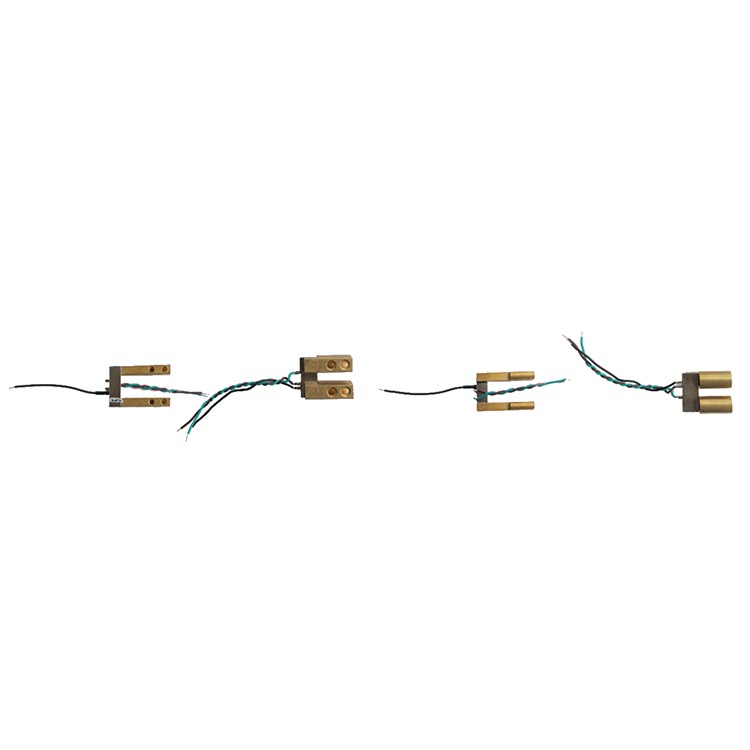
Battery Shunt Meter: A battery shunt meter is a specialized type of shunt used for monitoring the charging and discharging of batteries. It helps in accurately measuring the current flowing in and out of the battery, which is essential for battery management systems. Battery shunt meters are crucial in applications where battery life and performance are of utmost importance, such as in renewable energy systems and backup power supplies. Check out our Battery Shunt Meter for more details.
Shunt 100a 75mv: This is a specific type of shunt with a rated current of 100 amperes and a voltage drop of 75 millivolts at the rated current. It is commonly used in medium - to high - current applications where accurate current measurement is required. You can find more information about our Shunt 100a 75mv on our website.
Applications of Voltage Shunts
Voltage shunts have a wide range of applications across various industries.
Power Generation and Distribution: In power plants and electrical substations, voltage shunts are used to measure the current flowing through high - voltage transmission lines. This information is crucial for monitoring power flow, load management, and ensuring the safety and reliability of the power grid.
Industrial Automation: In industrial settings, shunts are used in motor control centers, variable frequency drives, and other electrical equipment to measure the current drawn by motors and other loads. This helps in optimizing energy consumption, detecting faults, and preventing equipment damage.
Renewable Energy Systems: In solar and wind power systems, voltage shunts are used to measure the current generated by the solar panels or wind turbines. This data is used for energy monitoring, system performance evaluation, and battery charging control.
Advantages of Using Voltage Shunts
There are several advantages to using voltage shunts for current measurement.
Accuracy: Voltage shunts offer high - accuracy current measurement. Since the shunt resistor has a well - defined resistance value, the voltage drop across it can be accurately measured, allowing for precise current calculation.
Low Cost: Compared to other current - measuring devices, voltage shunts are relatively inexpensive. They provide a cost - effective solution for current measurement in a wide range of applications.
Wide Range of Current Measurement: Voltage shunts can be designed to measure a wide range of currents, from a few milliamperes to several thousand amperes. This makes them suitable for various applications with different current requirements.
Considerations When Choosing a Voltage Shunt
When selecting a voltage shunt for a particular application, several factors need to be considered.
Resistance Value: The resistance value of the shunt resistor should be chosen based on the expected current and the desired voltage drop. A lower resistance value is required for higher - current applications to minimize power loss.
Power Rating: The shunt should have a sufficient power rating to handle the expected current without overheating. Overheating can cause the resistance value of the shunt to change, leading to inaccurate current measurement.
Accuracy: The accuracy of the shunt is an important consideration, especially in applications where precise current measurement is required. Higher - accuracy shunts are generally more expensive but offer better performance.
In conclusion, voltage shunts are essential components in electrical circuits for accurate current measurement. As a shunt supplier, we offer a wide range of high - quality shunts to meet the diverse needs of our customers. Whether you are in the power generation, industrial automation, or renewable energy sector, we have the right shunt for your application.
If you are interested in purchasing our shunts or have any questions about our products, we encourage you to contact us for a detailed discussion. Our team of experts is ready to assist you in finding the most suitable shunt for your specific requirements.
References
- Electric Circuits, by James W. Nilsson and Susan A. Riedel
- Electrical Engineering Handbook, edited by Richard C. Dorf