

What is the resistance of Shunt 100a 75mv?
Hey there! As a supplier of Shunt 100a 75mv, I often get asked about the resistance of this particular shunt. So, let's dive right into it and figure out what the resistance of Shunt 100a 75mv actually is.
First off, let's understand what a shunt is. A shunt is a low - resistance device that is used in electrical circuits to measure current. It works on the principle of Ohm's Law, which states that V = IR, where V is the voltage, I is the current, and R is the resistance.
In the case of a Shunt 100a 75mv, the “100a” represents the maximum current that the shunt can handle, and “75mv” is the voltage drop across the shunt when the maximum current of 100 amperes is flowing through it.
Using Ohm's Law, we can calculate the resistance. Rearranging the formula R = V / I, we substitute V = 75 millivolts (or 0.075 volts) and I = 100 amperes.
So, R = 0.075 / 100 = 0.00075 ohms or 750 micro - ohms. That's the resistance of the Shunt 100a 75mv.
Now, you might be wondering why we need such a low - resistance shunt. Well, the main reason is to minimize the power loss in the shunt itself. When a large current flows through a circuit, if the shunt had a high resistance, it would consume a significant amount of power, which is not desirable. A low - resistance shunt ensures that most of the power is delivered to the load, and only a small amount is dissipated in the shunt.
Let's talk about some applications of the Shunt 100a 75mv. It's commonly used in DC circuits for current measurement. For example, in a DC Ammeter Shunt, the shunt is connected in parallel with the ammeter. The current flowing through the circuit is divided between the shunt and the ammeter. By measuring the voltage drop across the shunt, we can calculate the current flowing through the circuit.

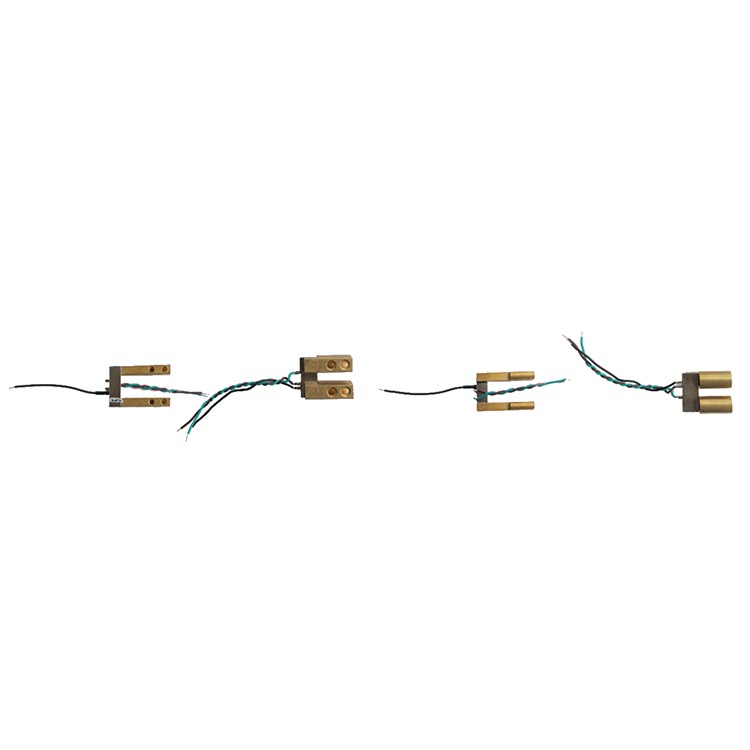
Another application is in Battery Shunt Meter. In a battery system, it's important to monitor the current flowing in and out of the battery. The Shunt 100a 75mv can be used to accurately measure this current, which helps in determining the state of charge of the battery and ensuring its proper operation.
As a supplier of Shunt 100a 75mv, I can tell you that we offer high - quality shunts that are precision - made. Our shunts are designed to have a very stable resistance over a wide range of temperatures and currents. This ensures accurate current measurement and long - term reliability.
We also provide technical support to our customers. If you have any questions about the installation, operation, or performance of our shunts, our team of experts is always ready to help. Whether you're a small business looking to measure current in a simple DC circuit or a large industrial facility with complex electrical systems, our Shunt 100a 75mv can meet your needs.
When it comes to choosing a shunt, there are a few things to keep in mind. First, make sure that the maximum current rating of the shunt is suitable for your application. If you try to pass a current higher than the rated value through the shunt, it can overheat and damage the device.
Second, consider the accuracy of the shunt. Higher - accuracy shunts will give you more precise current measurements, which is crucial in applications where accuracy is important, such as in scientific experiments or high - precision electrical systems.
Finally, look at the physical size and mounting options of the shunt. You need to make sure that the shunt can be easily installed in your circuit and that it doesn't take up too much space.
In conclusion, the resistance of a Shunt 100a 75mv is 750 micro - ohms. It's a very useful device for current measurement in DC circuits, with applications in ammeters, battery meters, and many other electrical systems. If you're in the market for a high - quality Shunt 100a 75mv, we're here to help. Contact us to discuss your requirements and start the procurement process. We're confident that our shunts will meet your needs and provide you with accurate and reliable current measurement.
References:
- Basic Electrical Engineering textbooks for understanding Ohm's Law and shunt operation.
- Industry standards and specifications for shunts in electrical circuits.