

What is the voltage drop across a DC ammeter shunt?
Yo, folks! As a supplier of DC Ammeter Shunts, I often get asked about the voltage drop across these little but crucial components. So, let's dive right into it and break down what this voltage drop is all about.
First off, what's a DC Ammeter Shunt? Well, it's a low - resistance device that's connected in parallel with an ammeter. Its main job is to allow a large current to pass through it while only a small fraction of the current goes through the ammeter. This way, we can measure high currents without overloading the ammeter. You can find more about DC Ammeter Shunt on our website.
Now, let's talk about voltage drop. Voltage drop is the decrease in voltage that occurs as current flows through a component in a circuit. In the case of a DC ammeter shunt, when current passes through it, there's a voltage difference across its terminals. This voltage drop is directly proportional to the current flowing through the shunt, according to Ohm's Law (V = IR, where V is voltage, I is current, and R is resistance).
The resistance of a DC ammeter shunt is carefully designed to be very low. Why? Because we want most of the current to flow through the shunt, and a low resistance ensures that. For example, if we have a Shunt 100a 75mv, it means that when a current of 100 amperes flows through the shunt, the voltage drop across it will be 75 millivolts.
Let's take a closer look at how this works in a real - world scenario. Suppose you're working on a battery - powered system, and you want to measure the current flowing in and out of the battery. You'd use a Battery Shunt Meter. The shunt is placed in the path of the current, and as the current moves through it, a voltage drop is created. This voltage drop can then be measured and used to calculate the actual current flowing through the circuit.
The accuracy of measuring the voltage drop across the shunt is super important. A small error in measuring the voltage can lead to a significant error in calculating the current. That's why our DC ammeter shunts are made with high - precision materials and manufacturing processes to ensure the resistance remains stable over time and under different environmental conditions.
One of the factors that can affect the voltage drop across a shunt is temperature. As the temperature changes, the resistance of the shunt material can also change. This is known as the temperature coefficient of resistance. We use materials with low temperature coefficients in our shunts to minimize the impact of temperature on the voltage drop and, consequently, on the current measurement.
Another thing to consider is the power dissipation in the shunt. When current flows through the shunt, power is dissipated in the form of heat (P = VI, where P is power). If too much power is dissipated, it can cause the shunt to overheat, which can not only affect the accuracy of the measurement but also damage the shunt. So, we design our shunts to handle the expected currents without excessive power dissipation.

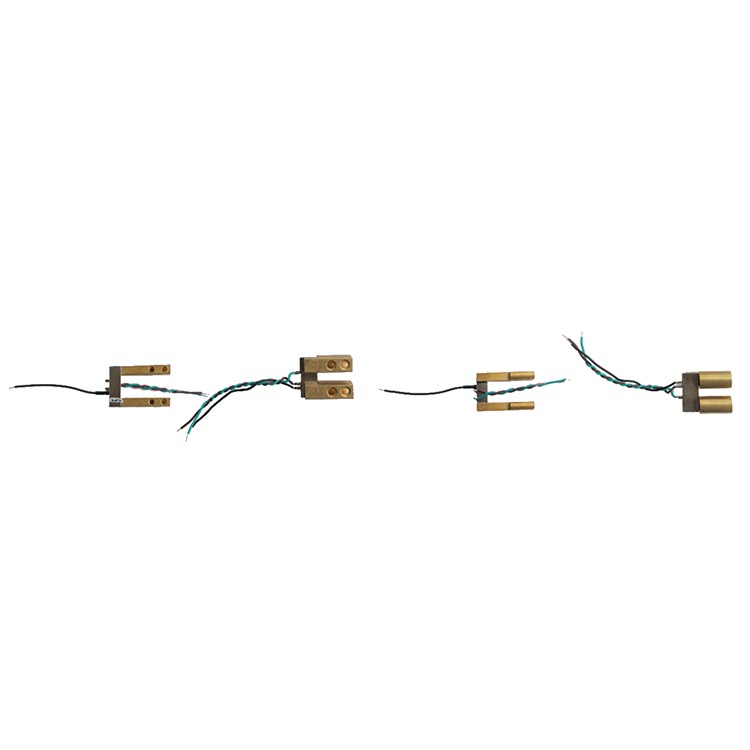
Now, you might be wondering how to choose the right DC ammeter shunt for your application. The first step is to determine the maximum current you need to measure. Based on that, you can select a shunt with an appropriate current rating. You also need to consider the voltage drop that's acceptable for your system. Some applications may require a very low voltage drop to avoid affecting the performance of other components in the circuit.
If you're in the process of selecting a DC ammeter shunt and have any questions, don't hesitate to reach out to us. We've got a team of experts who can help you pick the right shunt for your specific needs. Whether you're working on a small DIY project or a large - scale industrial application, we've got a wide range of shunts to choose from.
In summary, the voltage drop across a DC ammeter shunt is a key parameter that allows us to measure high currents accurately. By understanding how it works, what factors can affect it, and how to select the right shunt, you can ensure reliable current measurement in your circuits.
If you're interested in purchasing our DC ammeter shunts or want to discuss your requirements in more detail, feel free to get in touch with us. We're always ready to assist you in finding the best solution for your current - measurement needs.
References
- Electrical Engineering textbooks on circuit theory
- Manufacturer's datasheets for DC ammeter shunts
No Information