

How do you calculate the resistance of a shunt?
Calculating the resistance of a shunt is a crucial aspect, especially when you're in the business of supplying shunts like I am. Shunts are essential components in electrical systems, used to measure current by creating a known voltage drop. In this blog, I'll walk you through how to calculate the resistance of a shunt, and also share some insights from my experience as a shunt supplier.
What is a Shunt?
Before we dive into the calculations, let's quickly go over what a shunt is. A shunt is a low - resistance resistor that is connected in parallel with a circuit component, usually an ammeter. When current flows through the circuit, a portion of the current passes through the shunt. By measuring the voltage drop across the shunt, we can calculate the current flowing through it, and thus, the total current in the circuit.
The Basic Formula for Shunt Resistance
The formula for calculating the resistance of a shunt is based on Ohm's Law, which states that (V = IR), where (V) is the voltage, (I) is the current, and (R) is the resistance.
For a shunt, we know the current that we want to measure ((I_{total})) and the full - scale voltage drop across the shunt ((V_{shunt})) that we've designed for. The current through the shunt ((I_{shunt})) is a fraction of the total current, and the resistance of the shunt ((R_{shunt})) can be calculated using the formula:
(R_{shunt}=\frac{V_{shunt}}{I_{shunt}})
Let's say we have a shunt that is designed to measure a total current of (I_{total} = 100A) and has a full - scale voltage drop of (V_{shunt}=75mV = 0.075V). In an ideal situation, the shunt is designed to handle a significant portion of the total current. For simplicity, if we assume that the shunt is designed to carry the full (100A) (in practice, there might be some small current going through the measuring device in parallel), then using Ohm's Law:
(R_{shunt}=\frac{0.075V}{100A}= 0.00075\Omega=0.75m\Omega)
Practical Considerations in Shunt Resistance Calculation
In real - world scenarios, there are a few things to keep in mind when calculating shunt resistance.
Temperature Effects
The resistance of a shunt can change with temperature. Most shunts are made of materials with a known temperature coefficient of resistance (TCR). For example, manganin is a popular material for shunts because it has a very low TCR, which means its resistance changes very little with temperature.
If you know the TCR ((\alpha)) of the shunt material, the resistance at a different temperature (T_2) can be calculated using the formula:
(R_{T_2}=R_{T_1}[1+\alpha(T_2 - T_1)])
where (R_{T_1}) is the resistance at temperature (T_1).
Accuracy Requirements
When calculating shunt resistance, the accuracy of your measurement is crucial. Small errors in resistance calculation can lead to significant errors in current measurement. You need to consider the tolerance of the shunt resistor. For example, if a shunt has a tolerance of (\pm 1%), the actual resistance can vary within that range.
Different Types of Shunts and Their Resistance Calculations
As a shunt supplier, I deal with various types of shunts, each with its own unique requirements for resistance calculation.
Shunt 100a 75mv
This type of shunt is commonly used in electrical systems to measure a current of up to 100A with a 75mV voltage drop. As we calculated earlier, the resistance of this shunt is (0.75m\Omega). These shunts are often used in industrial applications where accurate current measurement is required.
DC Ammeter Shunt
DC ammeter shunts are designed to work with direct current circuits. The resistance calculation for these shunts is similar to the general shunt resistance calculation. However, you need to consider the specific requirements of the DC ammeter, such as its input impedance. The shunt resistance should be chosen in such a way that it doesn't significantly affect the operation of the ammeter.

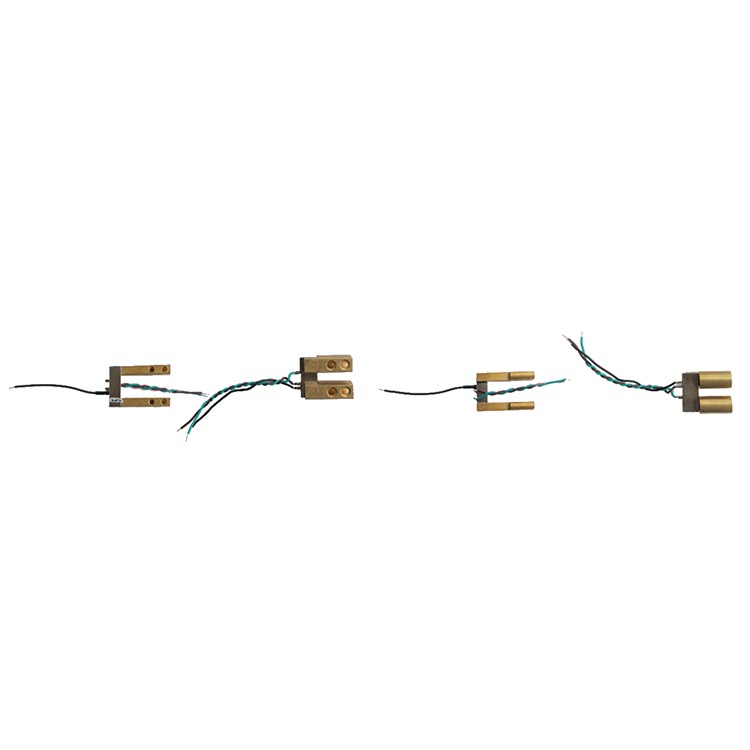
Battery Shunt Meter
Battery shunt meters are used to measure the current flowing in and out of a battery. The resistance of these shunts is calculated based on the maximum current that the battery can handle and the desired voltage drop across the shunt. For example, if a battery can supply a maximum current of (50A) and we want a (50mV) voltage drop across the shunt, then the shunt resistance is (R=\frac{0.05V}{50A}=1m\Omega).
Measuring Shunt Resistance
Once you've calculated the theoretical resistance of a shunt, it's important to measure it to ensure its accuracy. You can use a multimeter to measure the resistance of a shunt. However, for very low - resistance shunts, a four - wire measurement technique is often used. This technique helps to eliminate the resistance of the test leads, which can be significant compared to the shunt resistance.
Conclusion
Calculating the resistance of a shunt is a fundamental skill in the electrical industry. Whether you're an engineer designing a new electrical system or a technician maintaining an existing one, understanding how to calculate shunt resistance is crucial. As a shunt supplier, I've seen firsthand the importance of accurate shunt resistance calculation in ensuring the proper operation of electrical systems.
If you're in the market for high - quality shunts, we've got you covered. We offer a wide range of shunts, including Shunt 100a 75mv, DC Ammeter Shunt, and Battery Shunt Meter. If you have any questions about shunt resistance calculation or need help choosing the right shunt for your application, don't hesitate to reach out. We're here to assist you with your procurement needs and ensure that you get the best shunts for your projects.
References
- Horowitz, P., & Hill, W. (1989). The Art of Electronics. Cambridge University Press.
- Boylestad, R. L., & Nashelsky, L. (2002). Electronic Devices and Circuit Theory. Prentice Hall.