

What is the harmonic distortion of Shunt 100a 75mv?
Hey there! As a supplier of Shunt 100a 75mv, I often get asked about harmonic distortion in relation to our product. So, let's dig into what harmonic distortion of Shunt 100a 75mv is all about.
Understanding the Basics of Shunt 100a 75mv
First things first, let's quickly go over what a Shunt 100a 75mv is. A shunt is a low - resistance device that is used to measure electric current. In the case of our Shunt 100a 75mv, it's designed to handle a maximum current of 100 amperes (A), and when that full - load current of 100A passes through it, it produces a voltage drop of 75 millivolts (mV). This voltage drop can then be measured and used to calculate the current flowing in the circuit. You can find more details about Shunt 100a 75mv on our website.
What is Harmonic Distortion?
Harmonic distortion is a term that refers to the presence of harmonics in an electrical signal. In an ideal world, an electrical signal would be a pure sine wave. But in reality, due to non - linear loads in an electrical system, the signal gets distorted. Non - linear loads are things like computers, variable - speed drives, LED lights, and many other modern electronic devices. These devices draw current in a non - sinusoidal way, which means they introduce additional frequencies (harmonics) to the original 50Hz or 60Hz power frequency signal.
Harmonics are integer multiples of the fundamental frequency. For example, the 2nd harmonic is twice the frequency of the fundamental, the 3rd harmonic is three times the frequency, and so on. When these harmonics are present, they can cause all sorts of problems in an electrical system, such as overheating of equipment, interference with communication systems, and inaccurate measurement of electrical parameters.
How Does Harmonic Distortion Affect Shunt 100a 75mv?
When it comes to our Shunt 100a 75mv, harmonic distortion can have a significant impact on its performance and the accuracy of current measurement. The shunt is designed to measure the current based on the assumption that the current is a pure sine wave. But when harmonics are present in the current signal, the relationship between the current and the voltage drop across the shunt becomes more complex.
The resistance of the shunt is designed to be constant for a pure sine - wave current. However, the presence of harmonics can cause the effective resistance to change slightly due to the skin effect. The skin effect causes the alternating current to flow more on the outer surface of a conductor, and this effect becomes more pronounced at higher frequencies. Since harmonics are higher - frequency components, they can cause the current distribution within the shunt to change, leading to an inaccurate voltage drop measurement.
Another issue is that the measurement instruments connected to the shunt, such as ammeters or data loggers, are often designed to measure the root - mean - square (RMS) value of the current. In a pure sine - wave situation, calculating the RMS value is straightforward. But when harmonics are present, the RMS value calculation becomes more complicated, and if the measurement instrument doesn't account for harmonics properly, it can lead to inaccurate current readings.
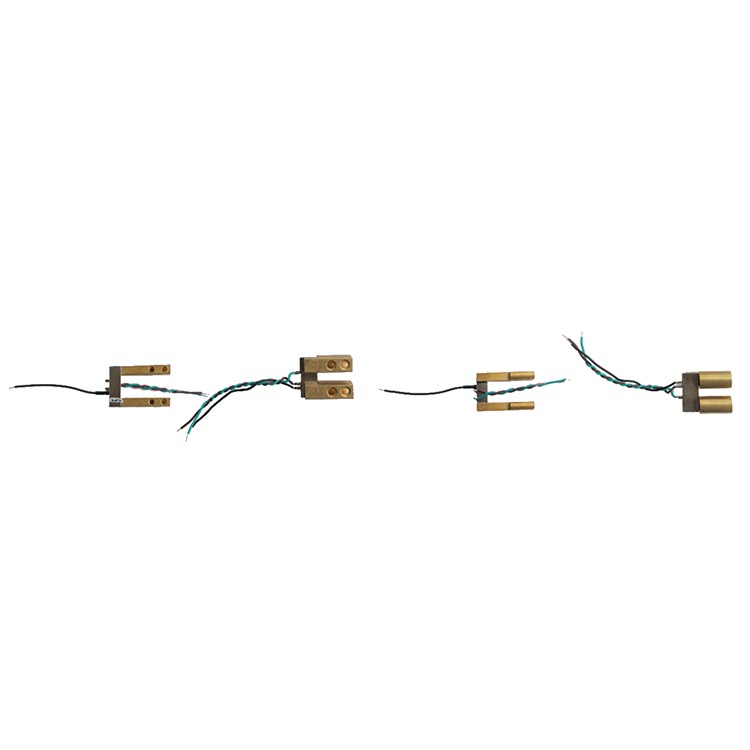

Measuring Harmonic Distortion in Shunt 100a 75mv
To measure the harmonic distortion in relation to our Shunt 100a 75mv, we need to use specialized equipment. A power quality analyzer is a common tool for this purpose. It can measure the current and voltage waveforms and break them down into their individual harmonic components.
The total harmonic distortion (THD) is a commonly used metric to quantify the amount of harmonic distortion in a signal. It is defined as the ratio of the sum of the RMS values of all the harmonic components to the RMS value of the fundamental component, usually expressed as a percentage. For example, a THD of 10% means that the total RMS value of all the harmonics is 10% of the RMS value of the fundamental frequency.
When measuring the THD in a circuit with a Shunt 100a 75mv, we connect the power quality analyzer to the shunt to measure the voltage drop across it. By analyzing the voltage waveform, we can determine the THD of the current flowing through the shunt.
Minimizing the Impact of Harmonic Distortion
As a supplier, we understand the importance of minimizing the impact of harmonic distortion on our Shunt 100a 75mv. One way to do this is by using high - quality materials in the manufacturing of the shunt. Materials with low resistivity and good conductivity can help reduce the effects of the skin effect caused by harmonics.
We also recommend using measurement instruments that are capable of accurately measuring harmonic - rich signals. Some advanced ammeters and data loggers have built - in algorithms to account for harmonics and provide more accurate current readings.
Another approach is to use harmonic filters in the electrical system. These filters are designed to reduce the level of harmonics in the current signal, thereby improving the overall power quality and the accuracy of current measurement using the shunt.
Applications and the Role of Harmonic Distortion
Our Shunt 100a 75mv is used in a wide range of applications, including battery monitoring and DC power systems. In battery monitoring, accurate current measurement is crucial for determining the state of charge and state of health of the battery. Harmonic distortion can lead to inaccurate current readings, which can in turn affect the battery management system's ability to make correct decisions. You can learn more about battery - related applications with our Battery Shunt Meter.
In DC power systems, especially those with non - linear loads, harmonic distortion can cause problems such as overheating of cables and components. By using our Shunt 100a 75mv and taking steps to minimize harmonic distortion, we can ensure the reliable and efficient operation of these systems. And for those interested in DC ammeter applications, check out our DC Ammeter Shunt.
Conclusion and Call to Action
So, there you have it! That's what harmonic distortion of Shunt 100a 75mv is all about. It's an important concept to understand, especially if you're using our shunt in applications where accurate current measurement is critical.
If you're in the market for a reliable Shunt 100a 75mv or have any questions about harmonic distortion and how it might affect your specific application, don't hesitate to reach out. We're here to help you make the best choice for your electrical system. Whether you're a small - scale user or a large - scale industrial customer, we can provide you with high - quality products and expert advice.
References
- Electrical Engineering Handbook, Third Edition
- Power Quality in Electrical Systems by Roger C. Dugan, Mark F. McGranaghan, Surya Santoso, and H. Wayne Beaty
No Information